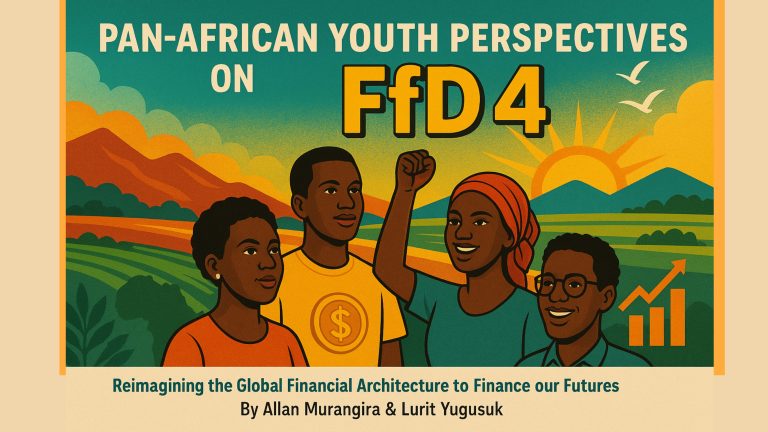
Africa, home to the youngest and fastest growing population globally, has faced shrinking fiscal space, capital flight, and uneven access to international financial markets. For African youth, who not only represent over 70% of the continent’s population but also the continent’s potential drivers of innovation and growth, these challenges translate into restricted opportunities, heightened vulnerabilities, and a fragile future.

Delegates agreed on the importance of preventing disputes before they occur. Yet tools like advance pricing agreements, joint audits, simultaneous examinations, and cooperative compliance programs remain unevenly accessible. Key views included support for a legal basis enabling cross-border preventive cooperation, strong calls for capacity-building, information-sharing, and improved access to timely data, and emphasis on strengthening information systems and exchange-of-information frameworks. Interests were also seen in optional cross-border prevention mechanisms backed by future best practices and CoP-led support.
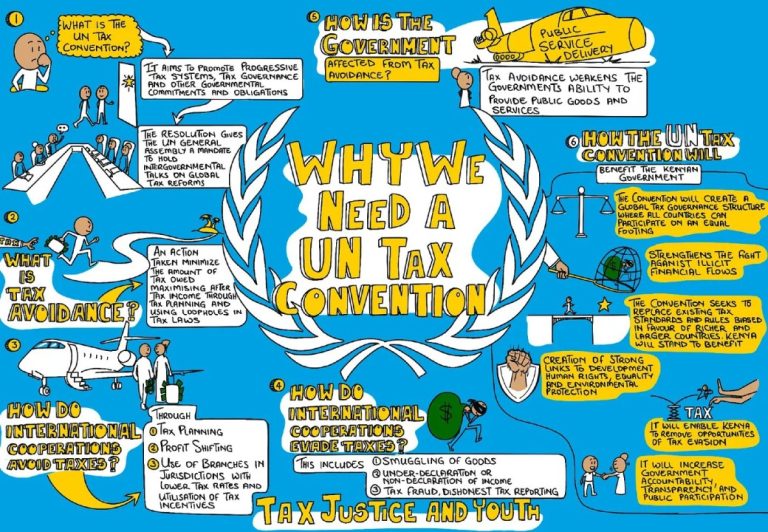
Attention class! Welcome for this free tutorial that you didn’t even sign up for, But Listen; Grab a…
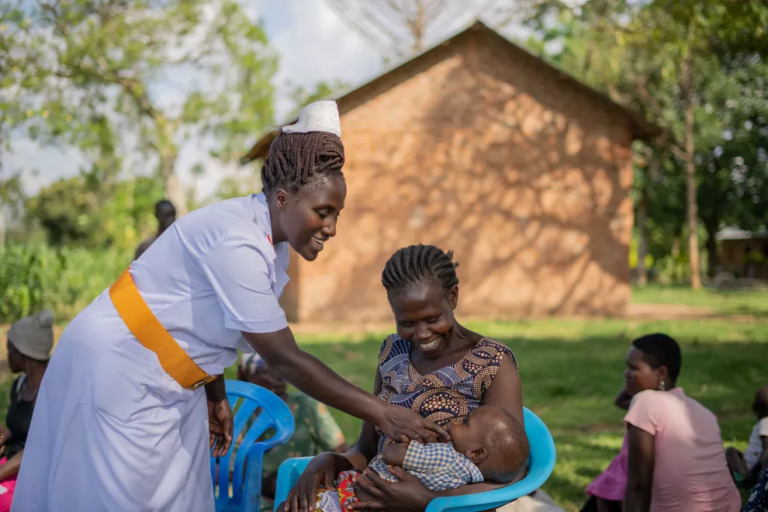
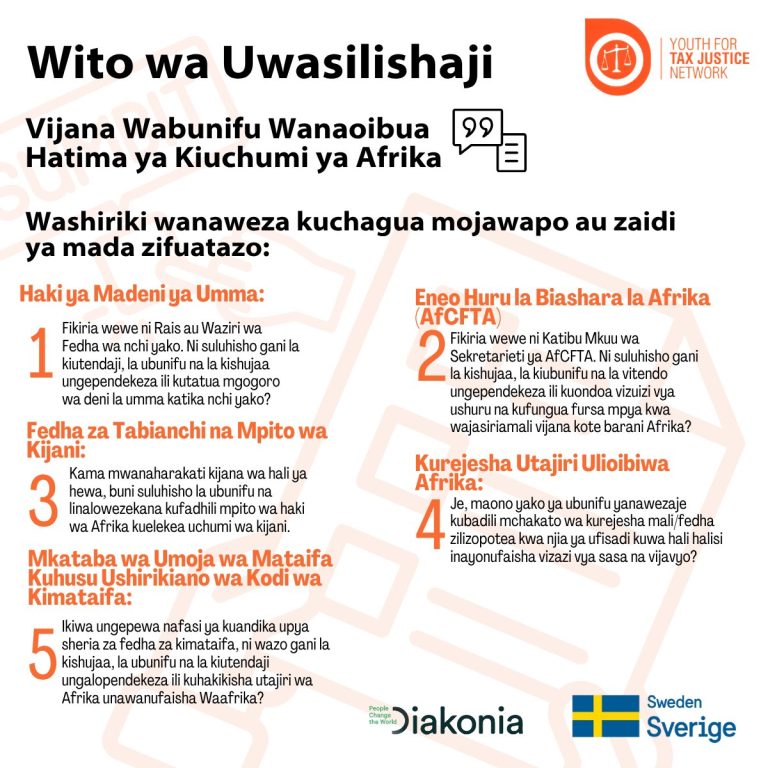
Kutambua hili, Youth for Tax Justice Network (YTJN) inapendekeza Shindano la Sanaa kwa Vijana Barani Afrika. Lengo ni kutumia ubunifu wa vijana wa Kiafrika kukuza fikra mpya na kuelewa wa ngazi ya jamii kuhusu masuala muhimu ya utawala wa kiuchumi, yakiwemo deni la umma, AfCFTA, fedha za hali ya hewa, urejeshaji wa mali, na Mkataba wa Umoja wa Mataifa kuhusu Ushirikiano wa Kodi wa Kimataifa.

Write I will write againYou said I should not hold back if it’s of gainThe lamentation, the insights…