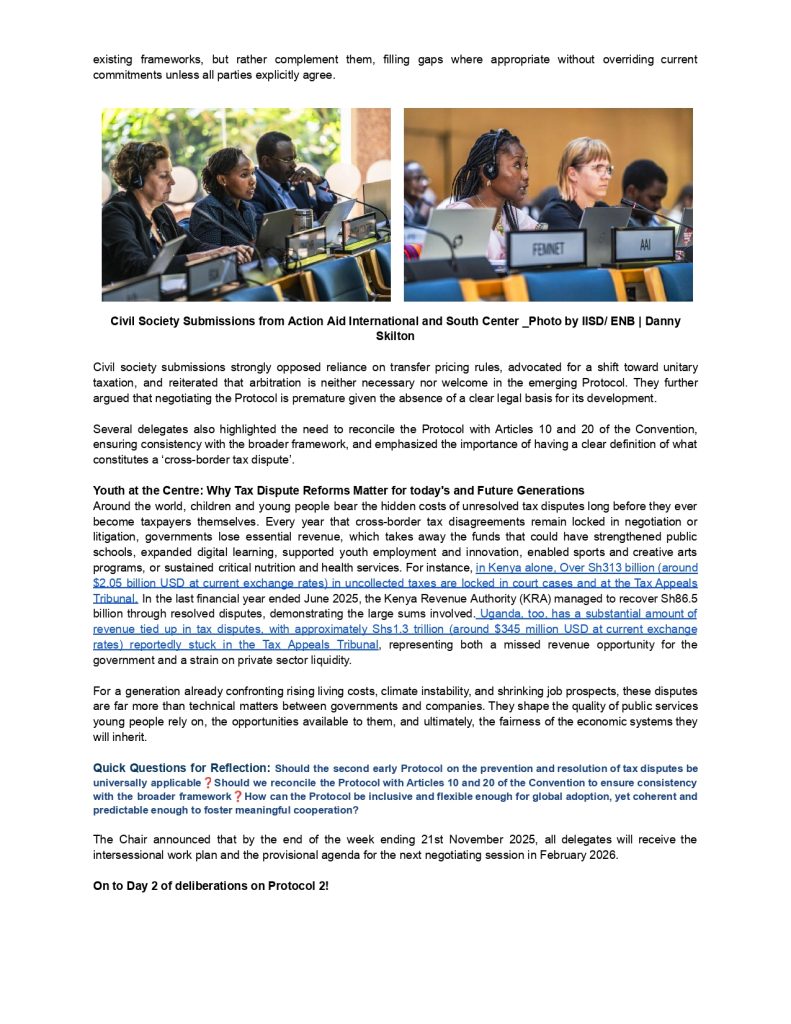
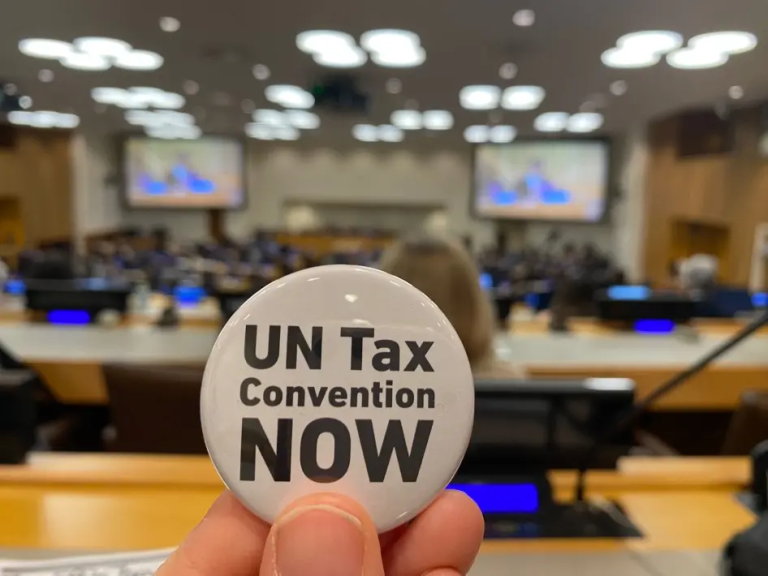
For youth participants, we see a distinct perspective, emphasizing that the current tax system often leaves Global South countries underfunded, limiting investments in youth employment, education, and digital access. We continue to highlight that failing to adapt taxation to modern digital economies risks perpetuating inequalities: large digital corporations operating in developing countries can avoid paying fair shares, while young entrepreneurs face regulatory burdens that stifle innovation. Civil society representatives reinforced these points, calling for tax rules that account for historical disparities between wealthy and developing nations. Discussions reflected a tension between protecting traditional national revenue sources and reforming systems to ensure equitable contributions from globalized business models.
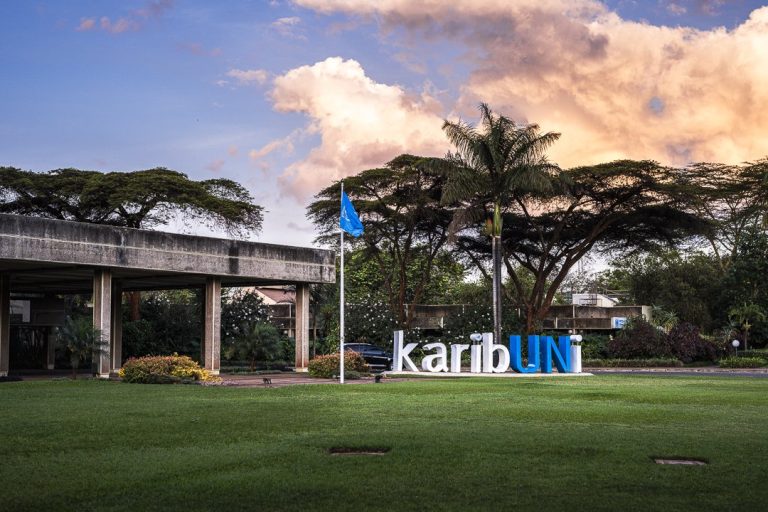
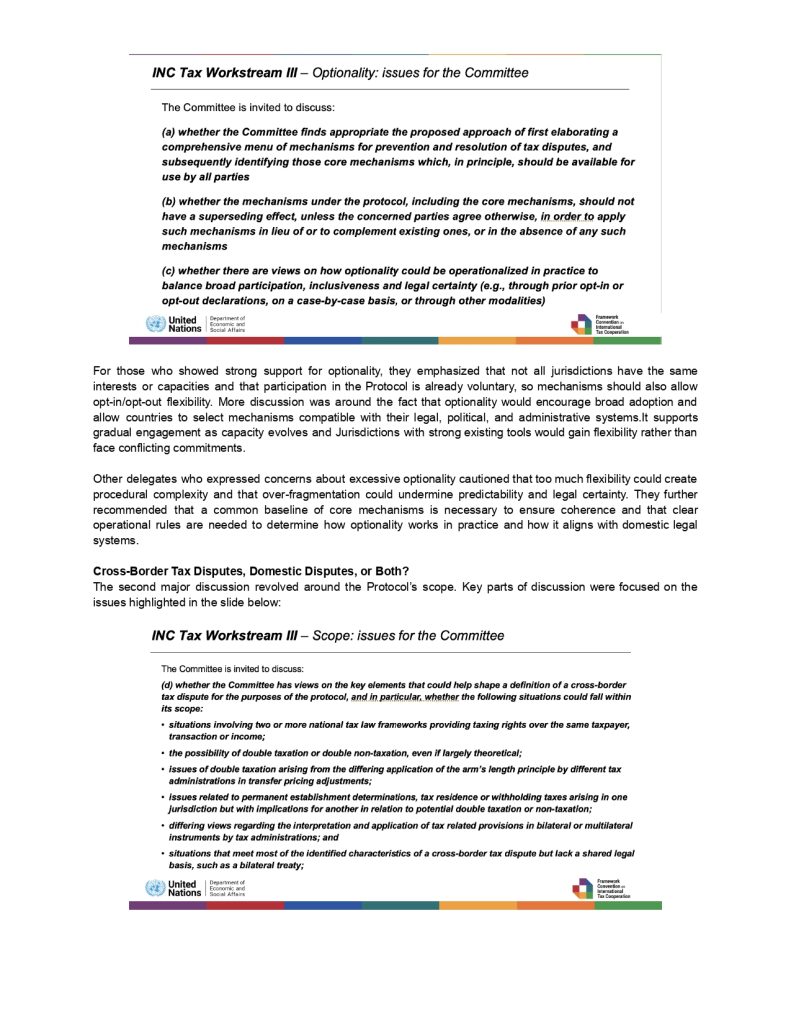
The Third Session of the Intergovernmental Negotiating Committee (INC-3) focused on advancing substantive negotiations on the UN Framework Convention on International Tax Cooperation and the Protocol on Prevention and Resolution of Tax Disputes. The programme of work was structured across two weeks, combining formal, informal, and closed meetings.
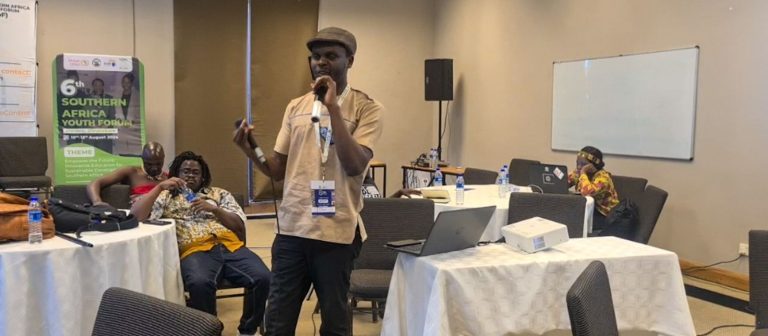
Apart from engaging in activism and lobbying, young people in the SADC area also use community-based projects to advance social justice and human rights. Numerous youth in the neighborhood participate in community-based initiatives that support social justice and human rights, especially in the fields of economic empowerment, health, and education.

By addressing the challenges of youth unemployment through targeted investments in skills development, health, and education and by leveraging digital technologies, Uganda can harness the potential of its young population to drive sustainable development and economic growth. Government Ministries, Departments and Agencies will collaborate extensively with Development Partners, Civil Society Organizations and young people’s movements to realize a demographic dividend and the aspirations of this National Youth Manifesto.
Download Full Declaration