
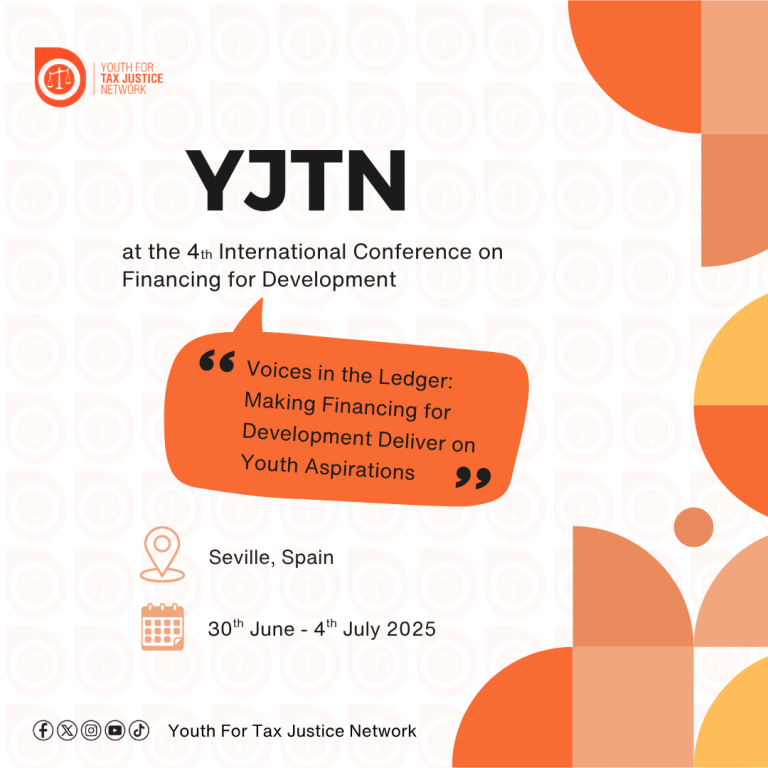
The leaders committed to “strengthen measures to curb corrupt borrowing and lending, including by enhancing domestic legal frameworks as appropriate, including clarifications regarding the authority to borrow, and fully utilizing UNCAC and its Conference of the State Parties to explore options to make such contracts unenforceable. We will establish a platform for borrower countries with support from existing institutions, and a UN entity serving as its secretariat.
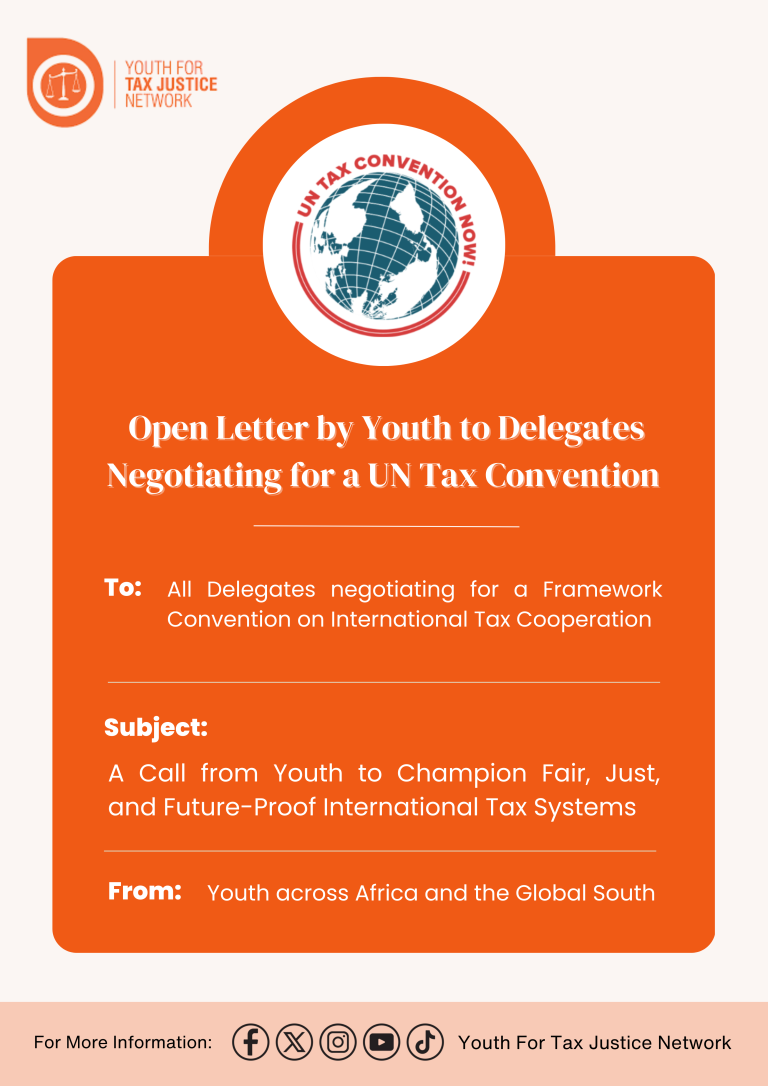
We write to you as the Youth for Tax Justice Network (YTJN), a global, youth-led coalition advocating for inclusive and equitable
tax systems that serve the needs of both present and future generations across Africa and Europe. As the Intergovernmental
Negotiating Committee deliberates on the United Nations Framework Convention on International Tax Cooperation in New York,
we urge you to recognize this moment for what it is: a generational turning point.
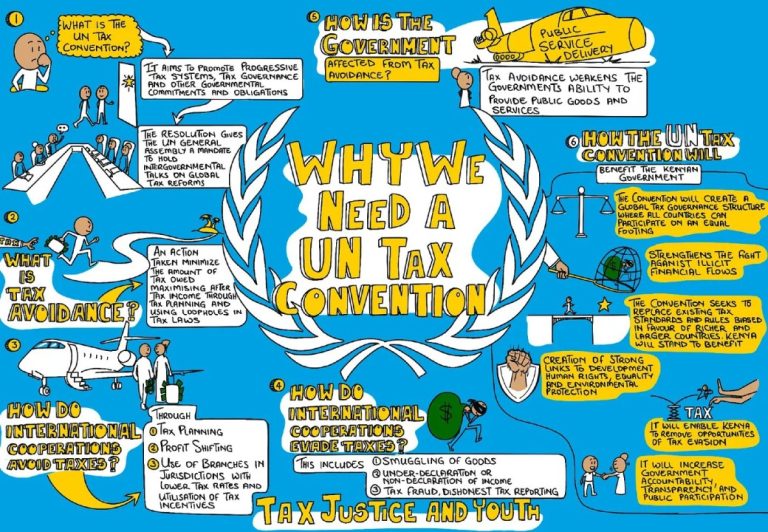
Attention class! Welcome for this free tutorial that you didn’t even sign up for, But Listen; Grab a…
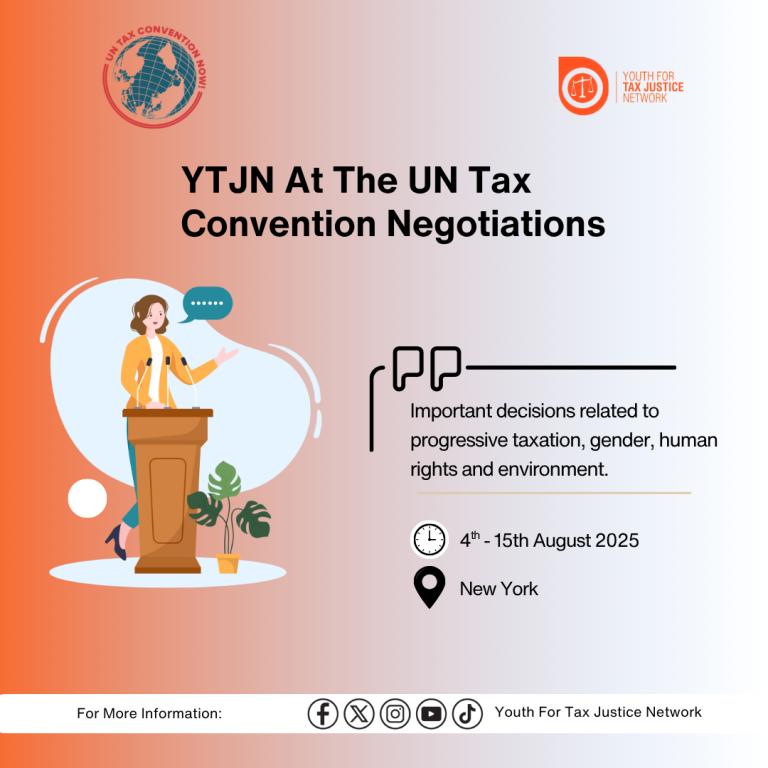
YTJN welcomes the opportunity to contribute to this historic process. As a global youth-led network, we stress that international tax rules must prioritize intergenerational justice, equitable public service financing, and youth participation in decision-making. Tax policy directly impacts young people’s access to education, healthcare, climate resilience, and economic opportunities.