Similar Posts
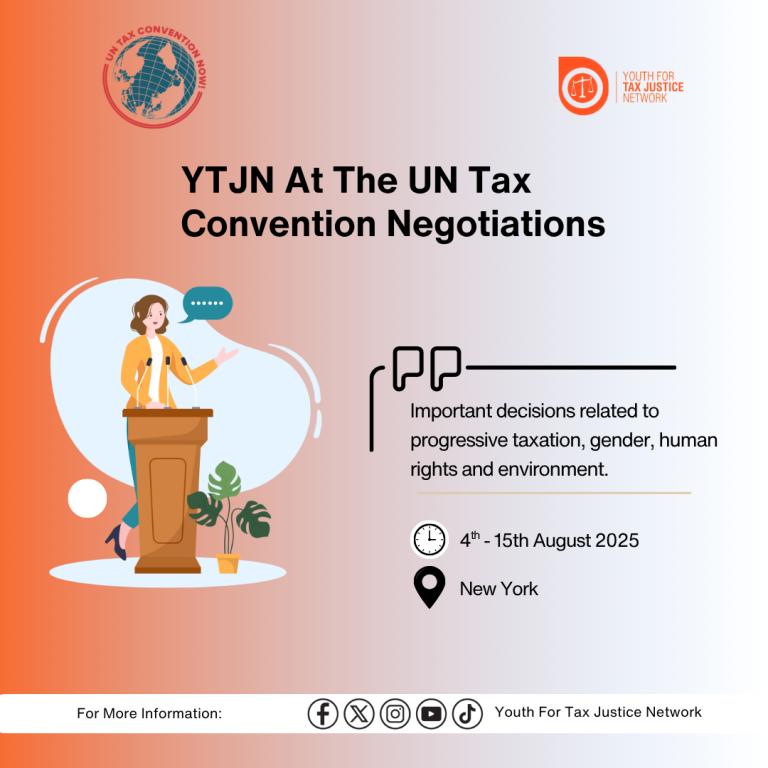
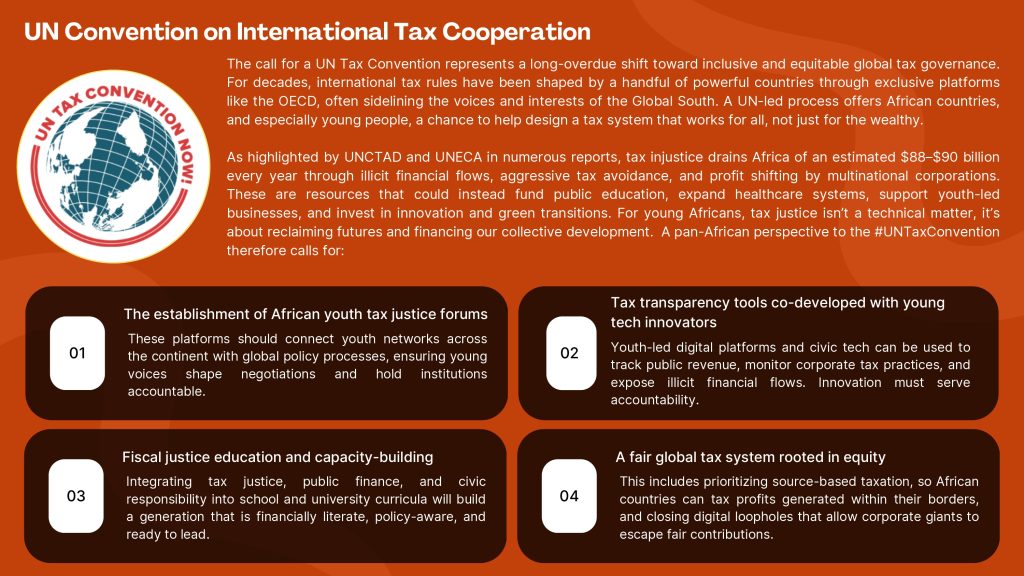
YTJN Input Into The UN Tax Convention Negotiations
YTJN welcomes the opportunity to contribute to this historic process. As a global youth-led network, we stress that international tax rules must prioritize intergenerational justice, equitable public service financing, and youth participation in decision-making. Tax policy directly impacts young people’s access to education, healthcare, climate resilience, and economic opportunities.
Kenya Youth Manifesto Asks
The youth of Kenya are a most resourceful, innovative, and active segment of our society. It generates ideas and their applications to spur and catalyse social and economic transformation.
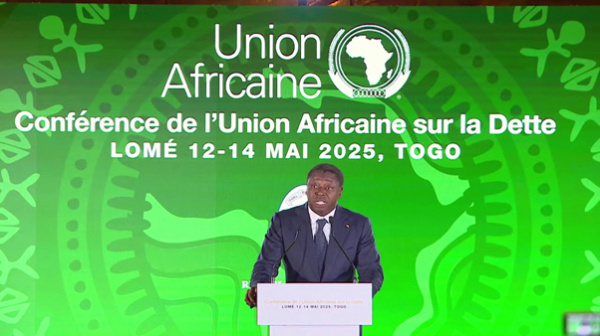
2025 Lome Declaration On Debt
Download Full Declaration
COP 30 in Belem: What It Meant for Youth and the Future of Climate Finance
This year’s COP, framed as the “implementation COP,” aimed to move beyond promises and focus on how to make climate commitments real. Yet, deep disagreements on finance, trade, fossil fuel pathways, and other areas delayed progress until the final hours. More than 80 countries pushed for a roadmap to phase out fossil fuels, while many advocates and developing nations called for stronger commitments on climate finance, but the final text fell short of expectations.
The 6th Southern Africa Youth Forum Harare Declaration
We recognize that the youth of Southern Africa represent an immense reservoir of energy, creativity, and potential that is critical to the continued progress and prosperity of our communities. As present leaders and change-makers of our region, we have a vital role to play in addressing the complex social, political, economic, and environmental challenges that we face. We have a role to complement our governments, the private sector, and all developmental actors to ensure access to quality and affordable education for the SADC child.