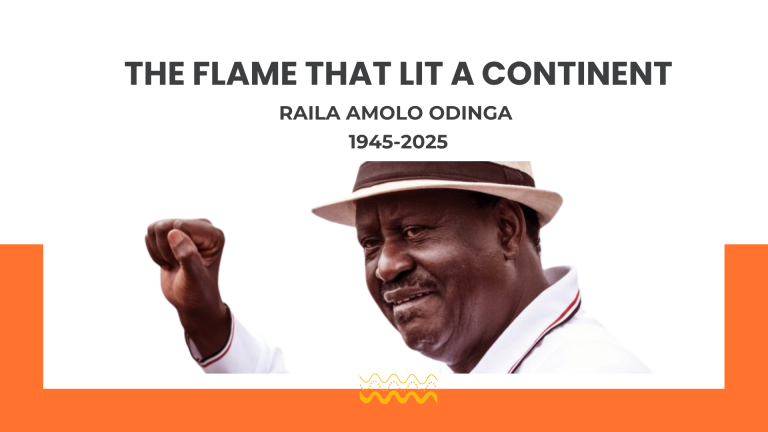
The tools he fought to place in our hands—the laws, the freedoms, the hope—are now ours to wield. Let us honor the whole of his journey—the triumphs and the scars—by building a future so just and free that it becomes his greatest testament.
n 2015, the Mbeki Panel on Illicit Financial Flows (IFFs) unveiled a truth that shook the continent: Africa was losing over $50 billion every year through illicit financial flows, all these are resources that could have transformed education, health, and infrastructure. Reports by the United Nations Economic Commission for Africa (UNECA), UNCTAD and TJNA in recent years have underscored that these amounts are even higher in 2025. The report did more than expose a crisis; it offered a roadmap for reclaiming Africa’s wealth and strengthening domestic resource mobilization.
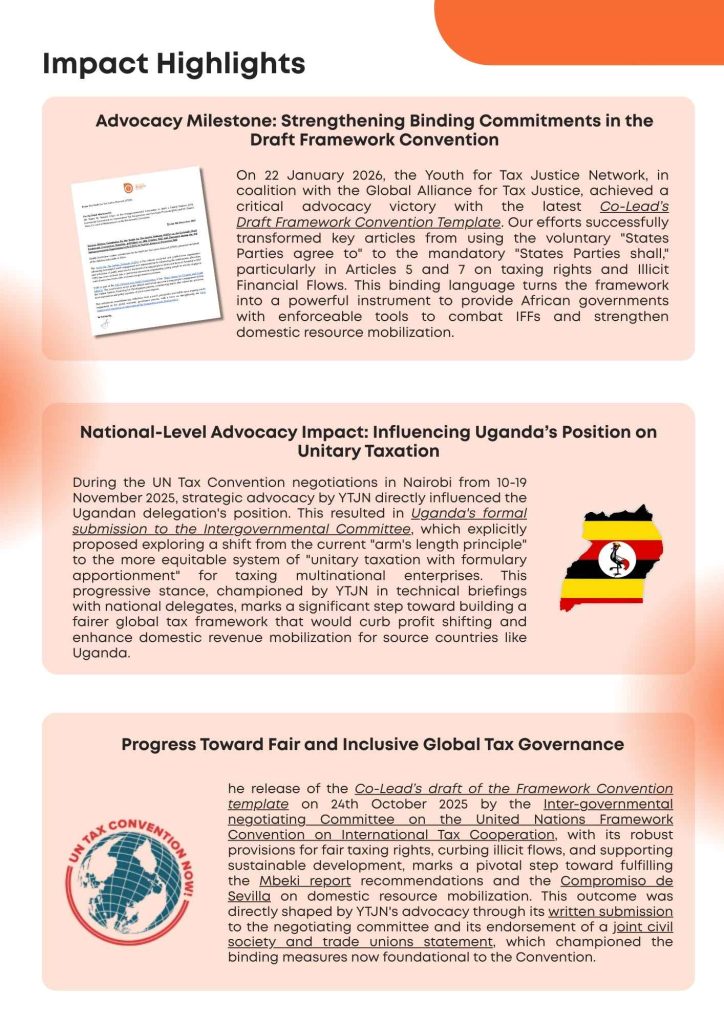
A decade later, that call for action still resonates, but it now meets a generation ready to act. The Youth for Tax Justice Network (YTJN) represents this renewed energy. It demonstrates the work young people are doing to advance the Mbeki Report’s vision through advocacy, policy dialogue, and youth-led campaigns that push for greater transparency, fair taxation, and accountability across Africa and beyond.
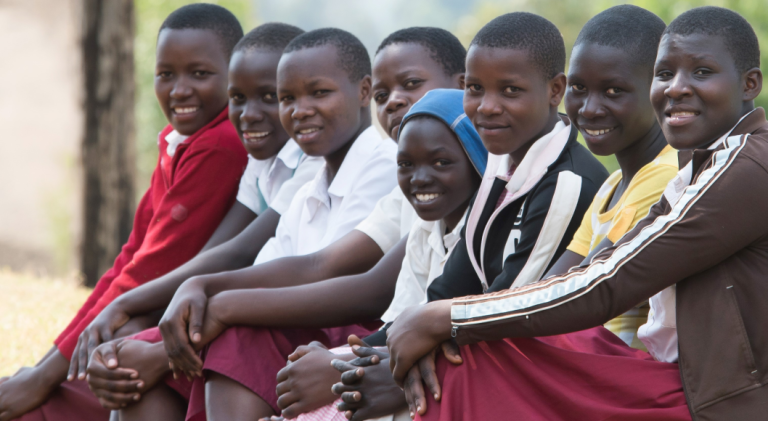
Apart from engaging in activism and lobbying, young people in the SADC area also use community-based projects to advance social justice and human rights. Numerous youth in the neighborhood participate in community-based initiatives that support social justice and human rights, especially in the fields of economic empowerment, health, and education.

By addressing the challenges of youth unemployment through targeted investments in skills development, health, and education and by leveraging digital technologies, Uganda can harness the potential of its young population to drive sustainable development and economic growth. Government Ministries, Departments and Agencies will collaborate extensively with Development Partners, Civil Society Organizations and young people’s movements to realize a demographic dividend and the aspirations of this National Youth Manifesto.