Similar Posts
YTJN Nairobi Tax Talks RoundUp: Third Session of the Intergovernmental Negotiating Committee to Develop a UN Framework Convention on International Tax Cooperation Day 6
Delegates agreed on the importance of preventing disputes before they occur. Yet tools like advance pricing agreements, joint audits, simultaneous examinations, and cooperative compliance programs remain unevenly accessible. Key views included support for a legal basis enabling cross-border preventive cooperation, strong calls for capacity-building, information-sharing, and improved access to timely data, and emphasis on strengthening information systems and exchange-of-information frameworks. Interests were also seen in optional cross-border prevention mechanisms backed by future best practices and CoP-led support.
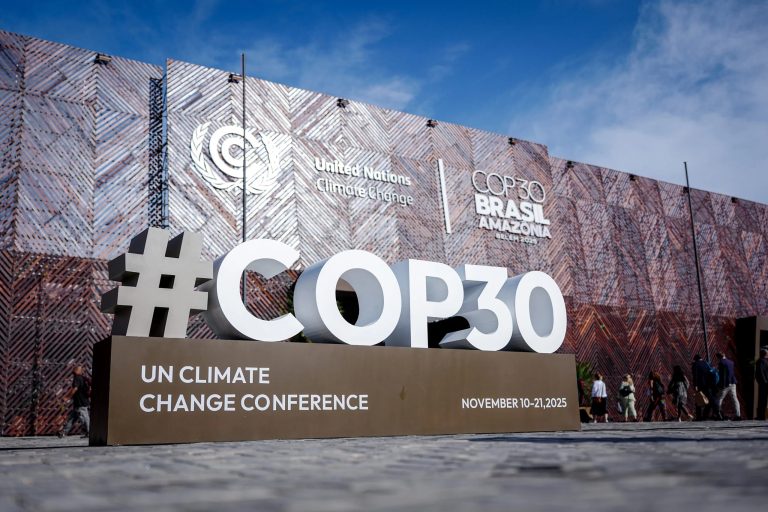
United Nations Climate Change Conference – Uganda At COP30
Uganda’s participation in the UNFCCC process continues to affirm our unwavering commitment to global climate action, sustainable development, and resilience building. As one of the Least Developed Countries (LDCs), Uganda remains steadfast in advocating for fairness, equity, and access to finance, technology, and capacity building under the principle of Common but Differentiated Responsibilities and Respective Capabilities (CBDR–RC).
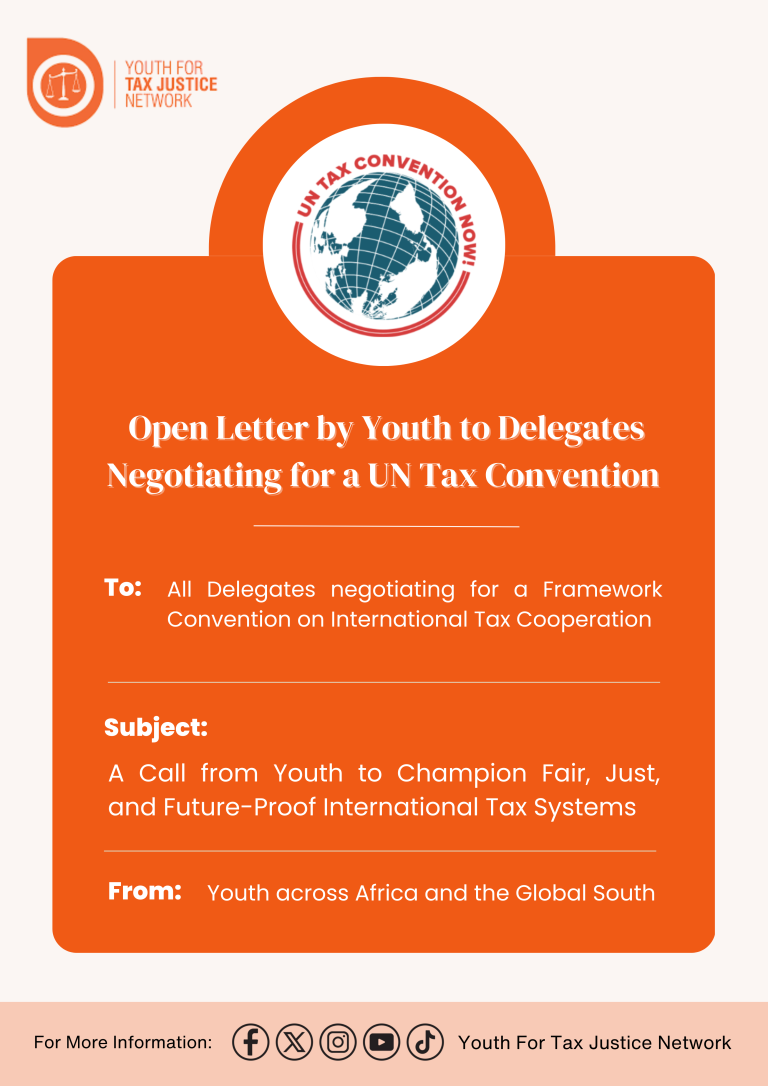
Youth Letter to Delegates Negotiating the UN Tax Convention Negotiations
We write to you as the Youth for Tax Justice Network (YTJN), a global, youth-led coalition advocating for inclusive and equitable
tax systems that serve the needs of both present and future generations across Africa and Europe. As the Intergovernmental
Negotiating Committee deliberates on the United Nations Framework Convention on International Tax Cooperation in New York,
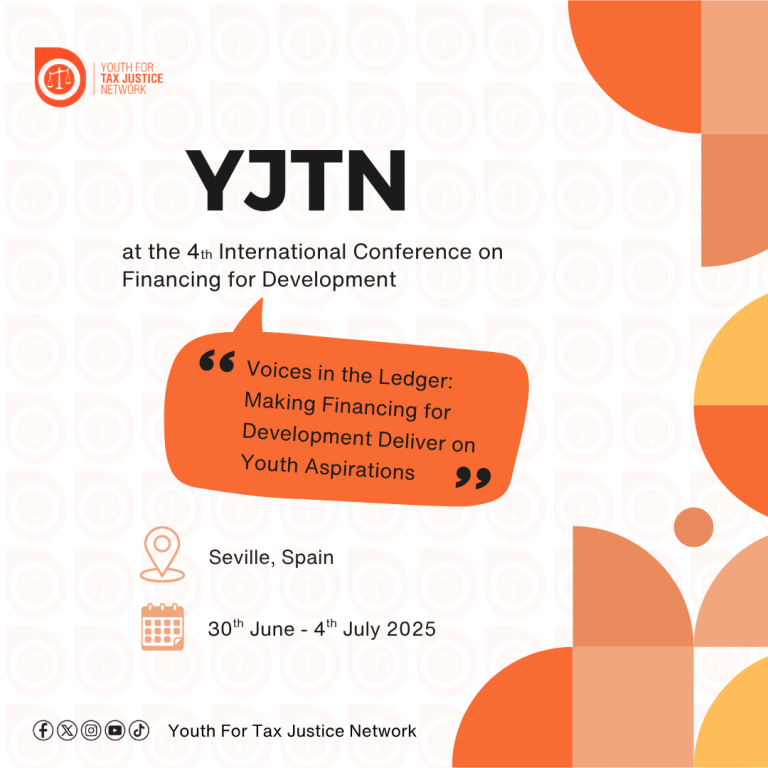
we urge you to recognize this moment for what it is: a generational turning point.Outcome document of the Fourth International Conference on Financing for Development
The leaders committed to “strengthen measures to curb corrupt borrowing and lending, including by enhancing domestic legal frameworks as appropriate, including clarifications regarding the authority to borrow, and fully utilizing UNCAC and its Conference of the State Parties to explore options to make such contracts unenforceable. We will establish a platform for borrower countries with support from existing institutions, and a UN entity serving as its secretariat.
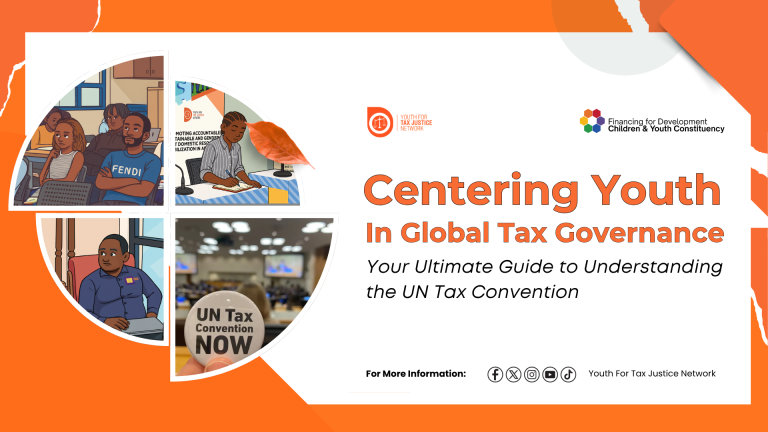
Centering Youth In Global Tax Governance – Your Ultimate Guide to Understanding the UN Tax Convention
In an era marked by deepening inequalities and shifting global financial systems, the question of who decides how resources are raised, shared, and governed has never been more urgent. Taxation, which has been long perceived as a technical issue reserved for experts and state negotiators, is now at the heart of global justice debates. As nations move toward a new United Nations Framework Convention on International Tax Cooperation, the need to ensure inclusivity, fairness, intergenerational equity and legitimacy within this process is critical.
At this critical juncture, the Youth Tax Justice Network (YTJN) stands at the forefront of redefining participation and representation in fiscal processes and fiscourse by championing the voices, priorities, and aspirations of young people across the Global South and beyond. We are backed by the belief and recognition that youth are not merely future taxpayers, but they are present stakeholders, who continue to find ways of organizing, researching, and advocating for a tax system that delivers equity, transparency, and sustainability.
World Environment Day 2025: Beat Plastic Pollution
As we approach World Environment Day on June 5, 2025, under the theme of “Beat Plastic Pollution,” we believe it is crucial to address the intertwined issues of plastic pollution and environmental degradation in our community.