Similar Posts
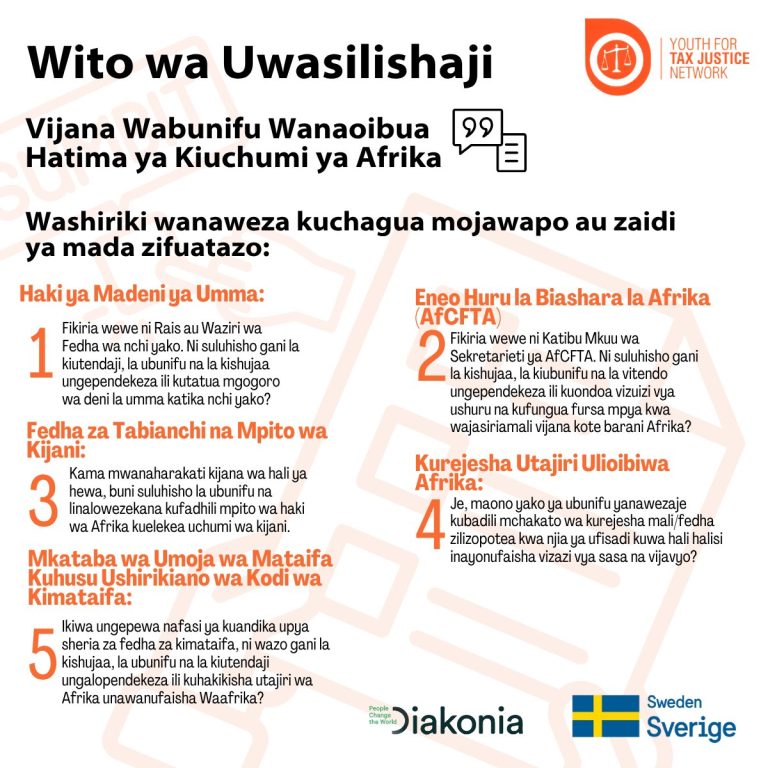
Mashindano ya ubunifu wa vijana wa kiafrika 2025
Kutambua hili, Youth for Tax Justice Network (YTJN) inapendekeza Shindano la Sanaa kwa Vijana Barani Afrika. Lengo ni kutumia ubunifu wa vijana wa Kiafrika kukuza fikra mpya na kuelewa wa ngazi ya jamii kuhusu masuala muhimu ya utawala wa kiuchumi, yakiwemo deni la umma, AfCFTA, fedha za hali ya hewa, urejeshaji wa mali, na Mkataba wa Umoja wa Mataifa kuhusu Ushirikiano wa Kodi wa Kimataifa.
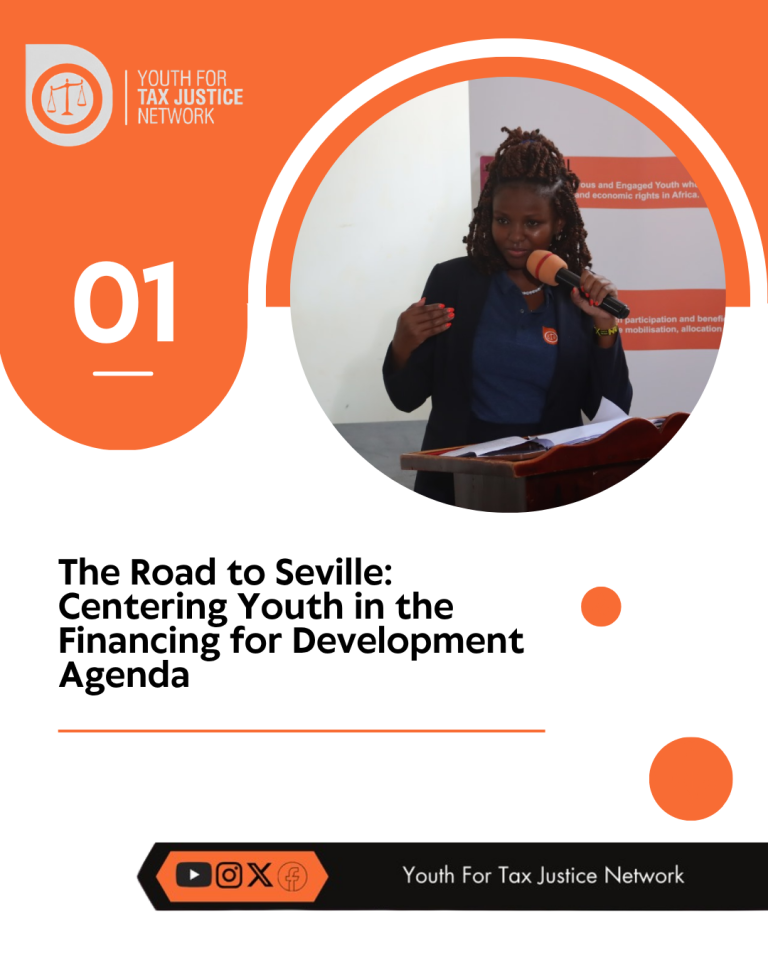
Why Should Young People Care about the Financing for Development Agenda?
It’s a call to action for youth to rise, engage, demand, and drive transformative change and co-creators of a new financing paradigm that truly serves the people and the planet. This piece is also a call to action for governments, multi-lateral institutions and civil society organizations to rise to the challenge of meaningful youth inclusion.
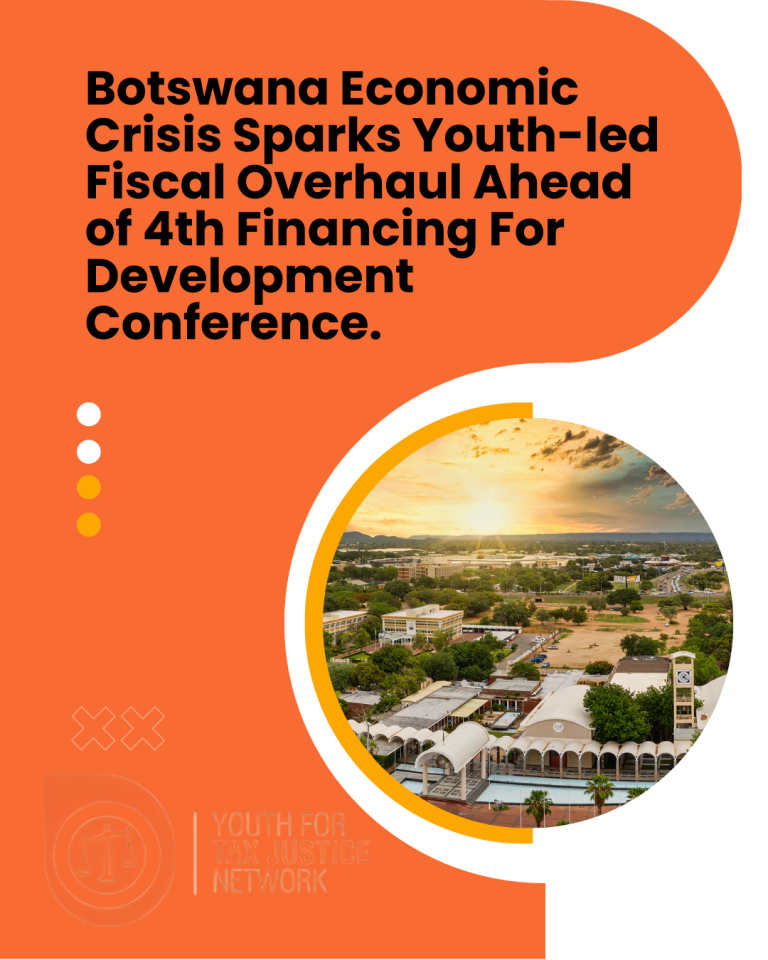
Botswana Economic Crisis Sparks Youth-led Fiscal Overhaul Ahead of 4th Financing For Development Conference.
As Batswana grapple with a BWP 22 billion budget deficit (9% of GDP in 2024), rising public debt of 27.4% of GDP, squeezing funds for youth-centric programs and youth unemployment at 43.86%, underscoring the urgency of prioritizing job creation and social services for the nation’s youth-dominated population (70% under 35), the FfD4 presents an opportunity for Batswana to redefine global rules on sovereign debt, a critical issue for Botswana as diamond revenue volatility strains public finances.
International Youth Day 2025 solidarity statement
As the Harare Declaration states, the African youth bulge as an engine for the continent’s structural transformation agenda is at risk of being a missed opportunity due to being saddled with accumulated debt, while potentially being locked out of accessing finance that is desperately needed to invest in them, and making them carry the burden of a mortgaged future. Instead of investing in our potential, governments are forced to divert billions to creditors, too often to lenders who prioritise profit over people. This is not only an economic imbalance; it is a generational betrayal. We thus demand debt and tax justice that put people and the planet first.
Report On The Review Of The Taita Taveta Youth Service Bill 2025
Download Full Report HERE