Similar Posts
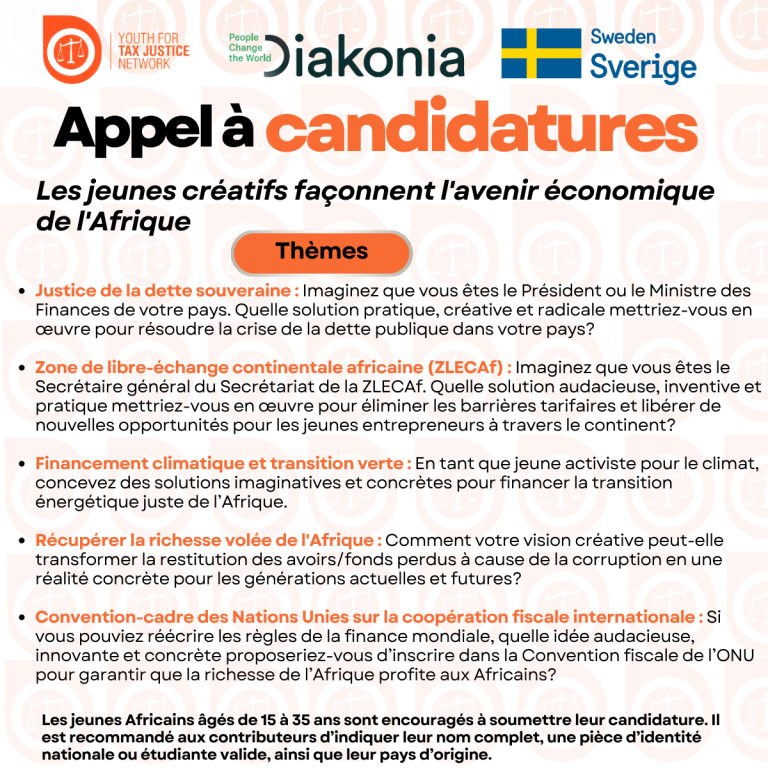
Concours panafricain des jeunes artistes créatifs 2025
C’est dans cette optique que le Youth for Tax Justice Network (YTJN) propose le Concours Panafricain de Jeunes en Arts Créatifs, une initiative qui vise à mobiliser la créativité de la jeunesse africaine afin de stimuler des idées novatrices et une prise de conscience populaire sur des enjeux clés de la gouvernance économique tels que la dette souveraine, la ZLECAf, le financement climatique, la récupération d’actifs et la Convention-cadre des Nations Unies sur la coopération fiscale internationale.
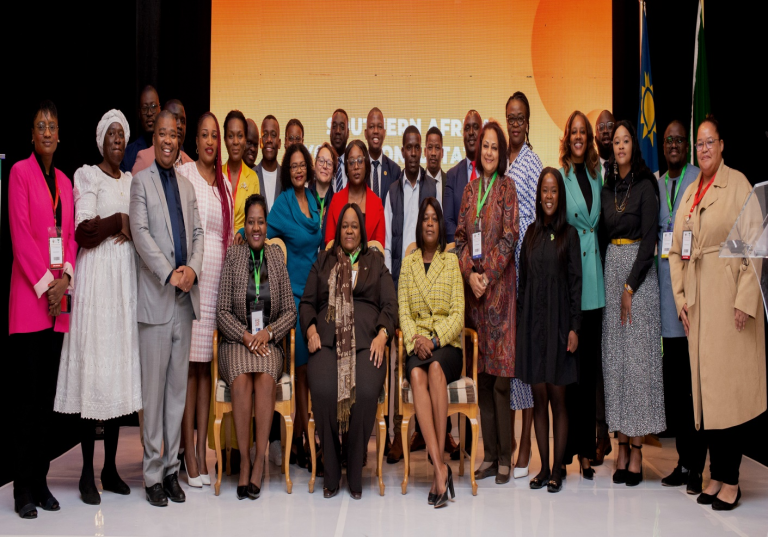
The Southern Consultations In Windhoek Namibia 2023
The 2016 Africa Human Development Report highlights that gender inequality is costing sub-Saharan Africa on average US$95 billion annually. Gender equality is therefore instrumental to achieving sustainable economic and social development and should be mainstreamed into Africa’s trade agenda to achieve sustainable and inclusive economic growth. Domestic resource mobilization has become a concern for economies in the global south because of the changing international financial architecture.
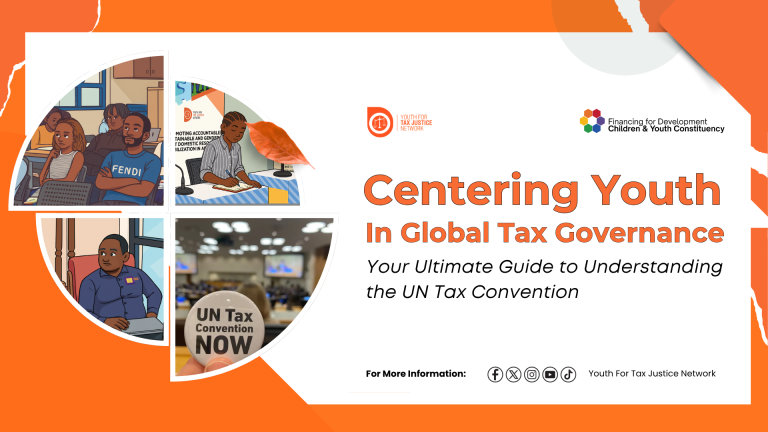
Centering Youth In Global Tax Governance – Your Ultimate Guide to Understanding the UN Tax Convention
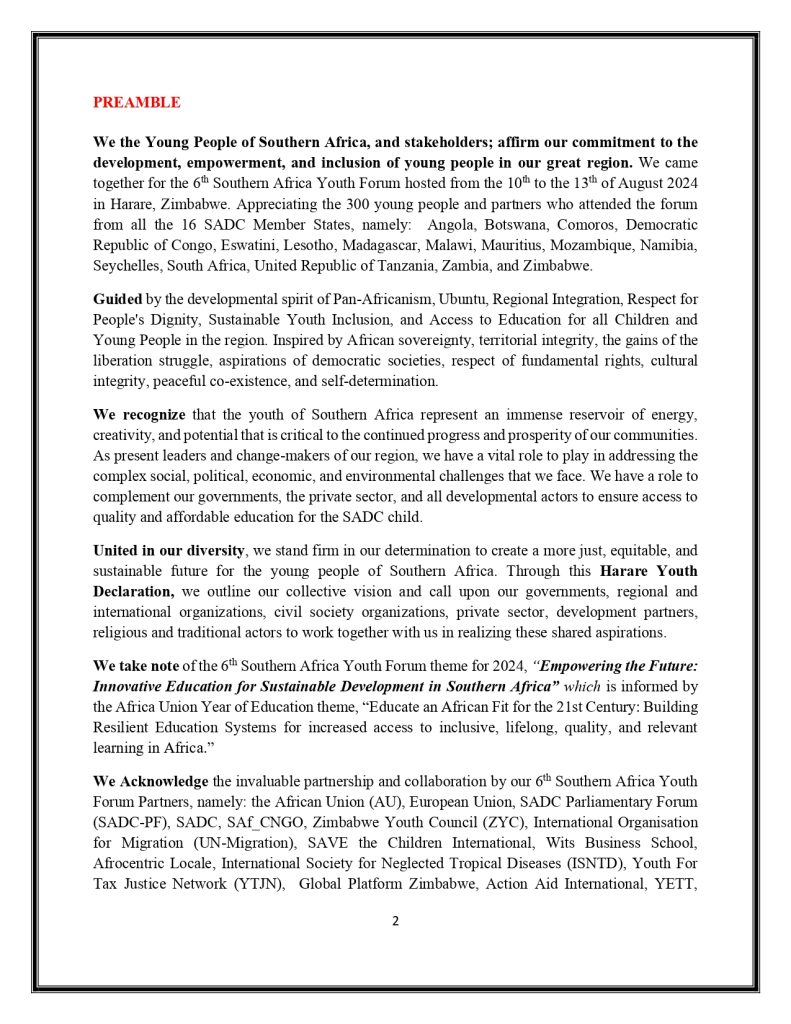
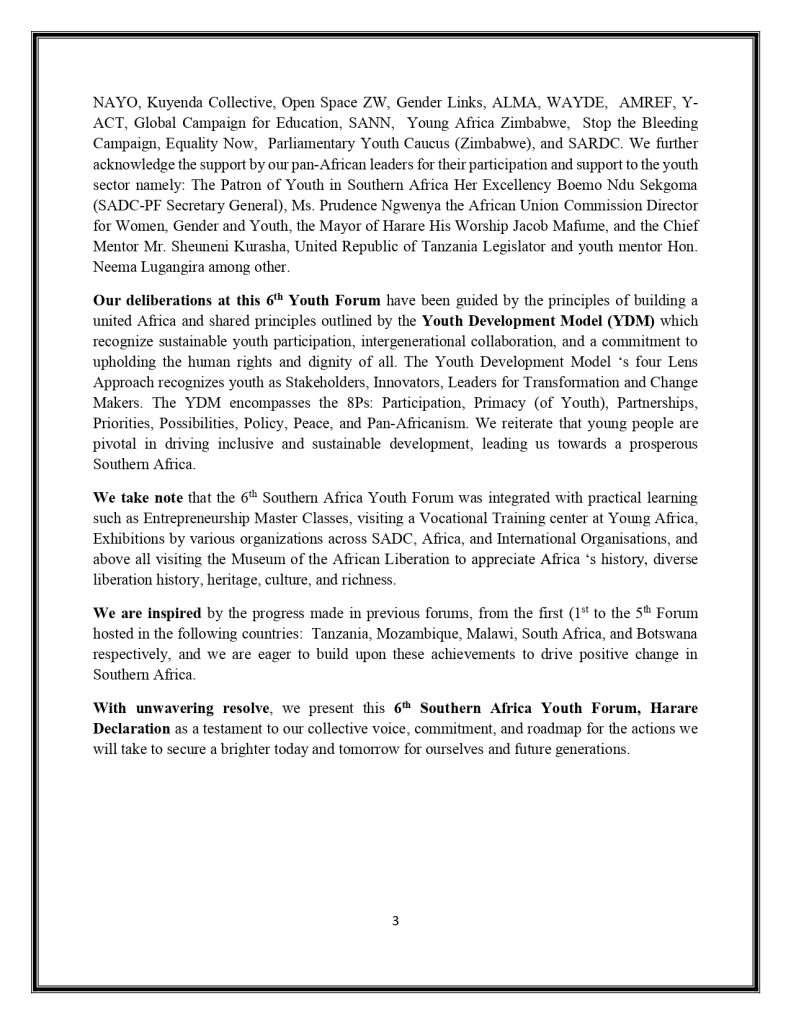
In an era marked by deepening inequalities and shifting global financial systems, the question of who decides how resources are raised, shared, and governed has never been more urgent. Taxation, which has been long perceived as a technical issue reserved for experts and state negotiators, is now at the heart of global justice debates. As nations move toward a new United Nations Framework Convention on International Tax Cooperation, the need to ensure inclusivity, fairness, intergenerational equity and legitimacy within this process is critical.
At this critical juncture, the Youth Tax Justice Network (YTJN) stands at the forefront of redefining participation and representation in fiscal processes and fiscourse by championing the voices, priorities, and aspirations of young people across the Global South and beyond. We are backed by the belief and recognition that youth are not merely future taxpayers, but they are present stakeholders, who continue to find ways of organizing, researching, and advocating for a tax system that delivers equity, transparency, and sustainability.
Prioritizing Children in the FY2025/26 Planning and Budgeting Process
Download Full Paper
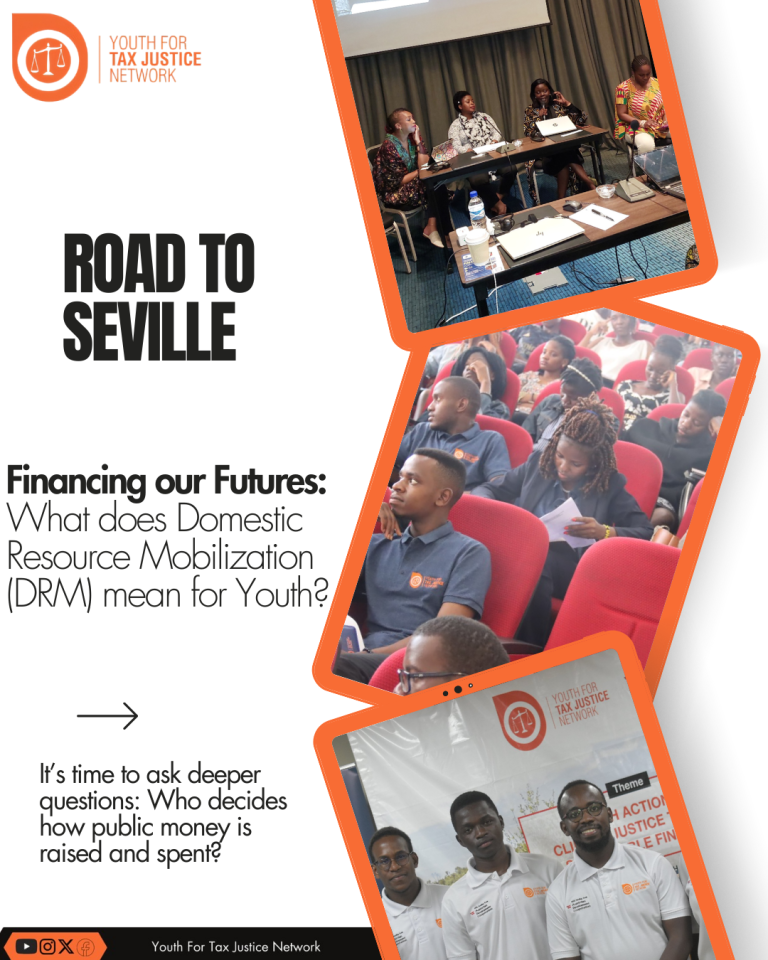
Financing our Futures: What does Domestic Resource Mobilization (DRM) mean for Youth?
Youth should care. The main reason is because we’re paying, but not heard. Africa is the youngest continent in the world, with over 60% of its population under the age of 25. Yet despite being the majority, young people are among the most heavily taxed, especially through consumption taxes such as VAT on airtime, mobile money, transport, and everyday goods.