Similar Posts
Youth Letter to Delegates Negotiating the UN Tax Convention Negotiations
We write to you as the Youth for Tax Justice Network (YTJN), a global, youth-led coalition advocating for inclusive and equitable
tax systems that serve the needs of both present and future generations across Africa and Europe. As the Intergovernmental
Negotiating Committee deliberates on the United Nations Framework Convention on International Tax Cooperation in New York,
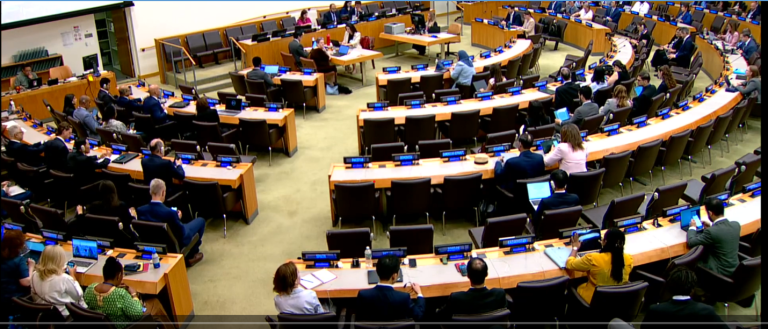
we urge you to recognize this moment for what it is: a generational turning point.Third Session of UN Tax Convention Negotiations Kicks Off in Nairobi as Governments Begin Text-Based Discussions
For young people across Africa and the world, these negotiations represent more than just policy debates. They offer an unprecedented opportunity to shape an economic future focused on intergenerational equity, where every resource counts, and where fiscal justice becomes a tool for equality, innovation, and opportunity.
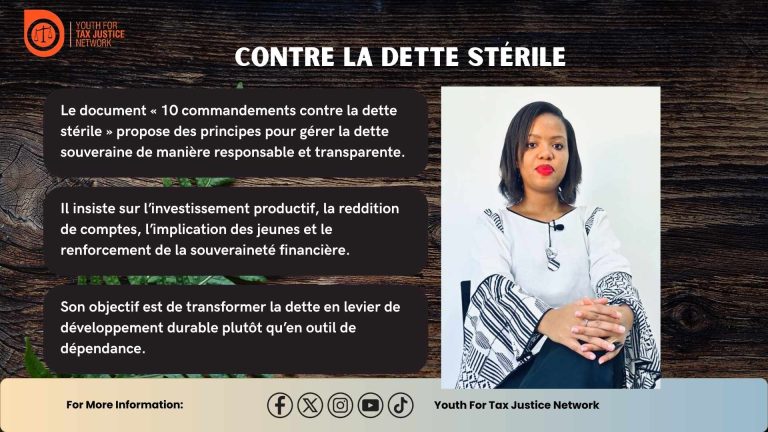
Contre la dette stérile
Ce document propose dix principes clés pour aider l’Afrique à affronter le poids de la dette souveraine avec sagesse et souveraineté. Transparence, redevabilité, exigence d’investissements productifs, implication de la jeunesse et construction d’une indépendance financière – autant de piliers pour transformer la dette en levier de développement, et non en outil de dépendance.
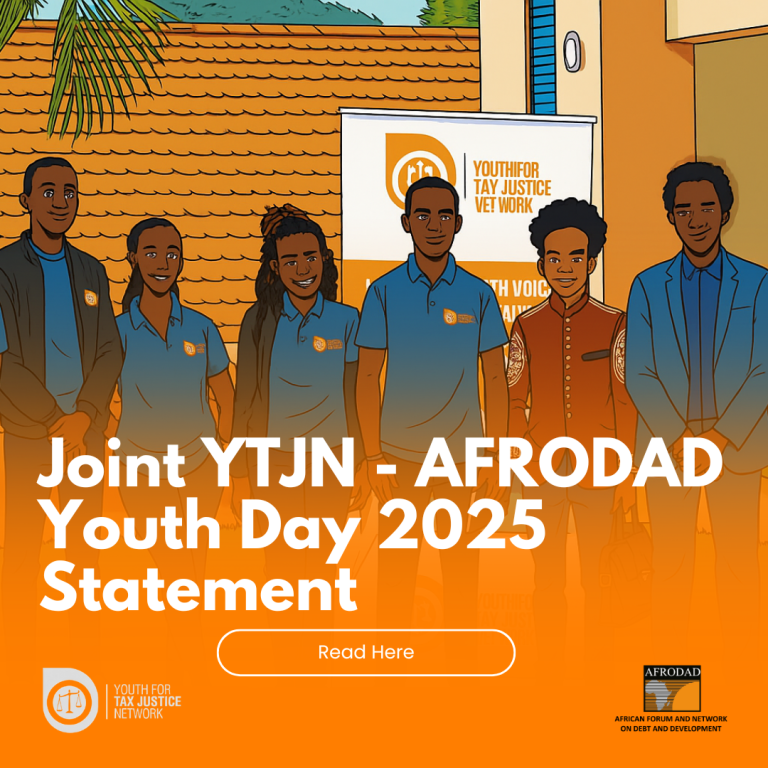
International Youth Day 2025 solidarity statement
As the Harare Declaration states, the African youth bulge as an engine for the continent’s structural transformation agenda is at risk of being a missed opportunity due to being saddled with accumulated debt, while potentially being locked out of accessing finance that is desperately needed to invest in them, and making them carry the burden of a mortgaged future. Instead of investing in our potential, governments are forced to divert billions to creditors, too often to lenders who prioritise profit over people. This is not only an economic imbalance; it is a generational betrayal. We thus demand debt and tax justice that put people and the planet first.
East African Community Youth Policy 2013
Download Full Policy
Concours panafricain des jeunes artistes créatifs 2025
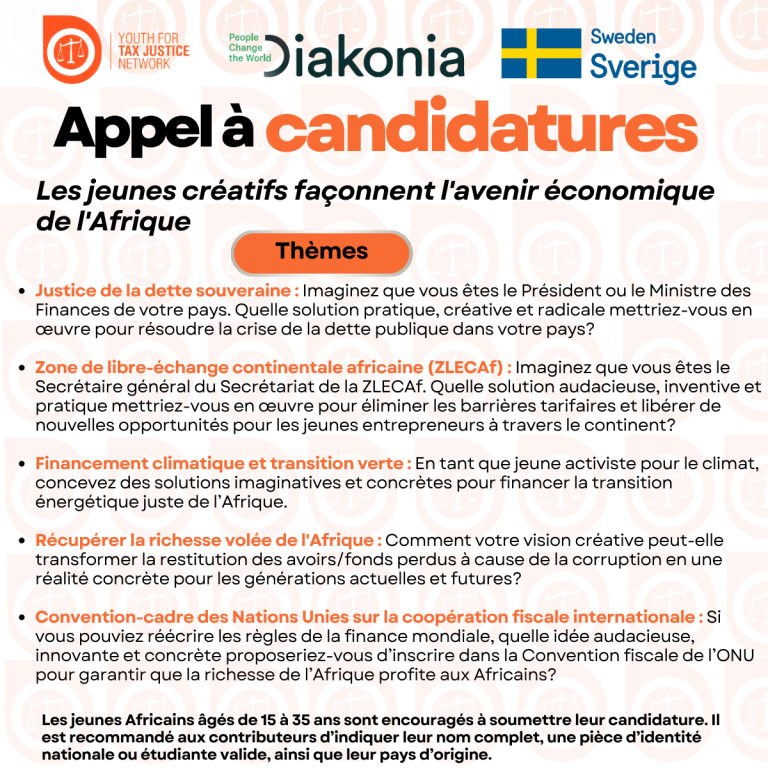
C’est dans cette optique que le Youth for Tax Justice Network (YTJN) propose le Concours Panafricain de Jeunes en Arts Créatifs, une initiative qui vise à mobiliser la créativité de la jeunesse africaine afin de stimuler des idées novatrices et une prise de conscience populaire sur des enjeux clés de la gouvernance économique tels que la dette souveraine, la ZLECAf, le financement climatique, la récupération d’actifs et la Convention-cadre des Nations Unies sur la coopération fiscale internationale.