Report On The Review Of The Taita Taveta Youth Service Bill 2025
Download Full Report HERE
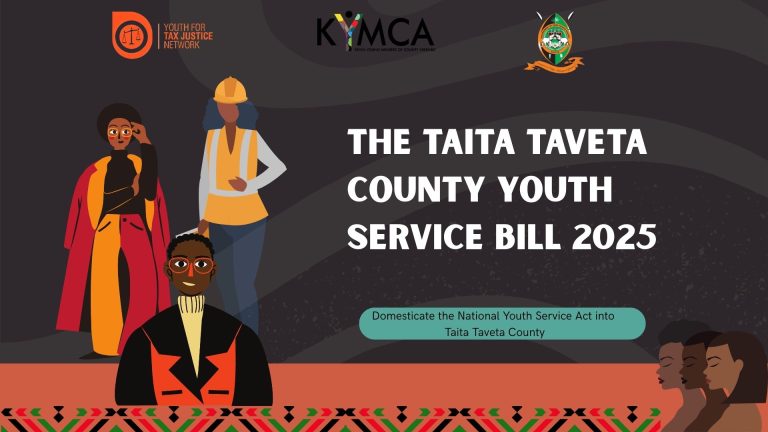
YTJN intends to once again collaborate with KYMCA to hold public hearings for the Bill with the citizens and the Assembly and then have the MCAs debate the Bill in the Assembly. This Bill once passed into law is expected to address youth unemployment, insufficient domestic resource mobilization, food insecurity, double taxation of youth operating in small and medium enterprises, teenage pregnancies, skillset mismatch amongst the youth, limited youth participation in formulation of policies and laws at County level among others.
Beyond formal education, investment is needed to support child-centered eco-learning programs and community outreach initiatives that raise awareness and empower youth with the knowledge and skills necessary for climate action. Utilizing digital platforms, radio programs, and visual materials in local languages will further expand the reach of climate literacy, ensuring no young person is left behind in understanding the climate crisis and their role in solving it.
As the Harare Declaration states, the African youth bulge as an engine for the continent’s structural transformation agenda is at risk of being a missed opportunity due to being saddled with accumulated debt, while potentially being locked out of accessing finance that is desperately needed to invest in them, and making them carry the burden of a mortgaged future. Instead of investing in our potential, governments are forced to divert billions to creditors, too often to lenders who prioritise profit over people. This is not only an economic imbalance; it is a generational betrayal. We thus demand debt and tax justice that put people and the planet first.
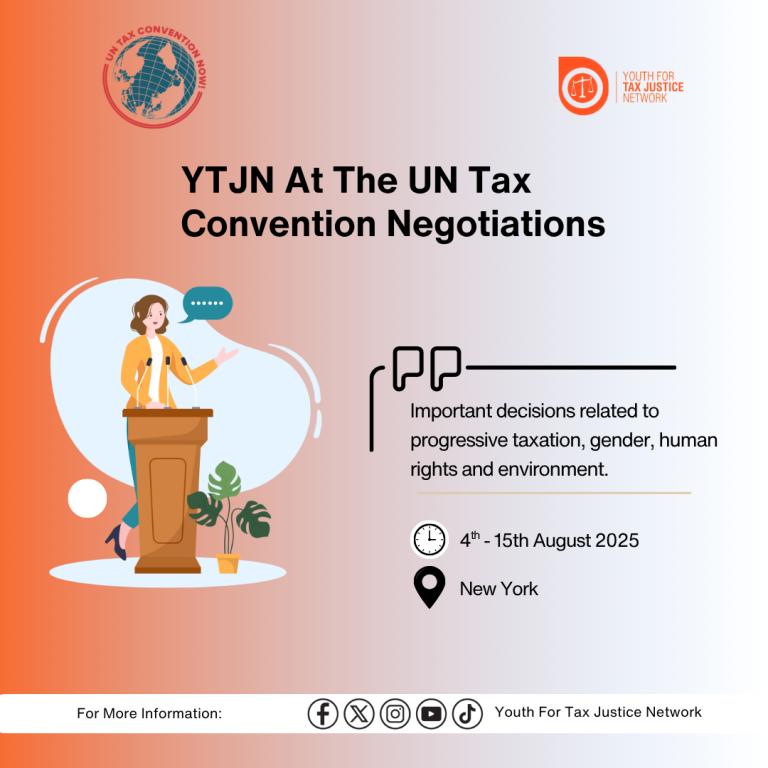
YTJN welcomes the opportunity to contribute to this historic process. As a global youth-led network, we stress that international tax rules must prioritize intergenerational justice, equitable public service financing, and youth participation in decision-making. Tax policy directly impacts young people’s access to education, healthcare, climate resilience, and economic opportunities.
The leaders committed to “strengthen measures to curb corrupt borrowing and lending, including by enhancing domestic legal frameworks as appropriate, including clarifications regarding the authority to borrow, and fully utilizing UNCAC and its Conference of the State Parties to explore options to make such contracts unenforceable. We will establish a platform for borrower countries with support from existing institutions, and a UN entity serving as its secretariat.
As we approach World Environment Day on June 5, 2025, under the theme of “Beat Plastic Pollution,” we believe it is crucial to address the intertwined issues of plastic pollution and environmental degradation in our community.
A key discussion point was the looming public debt crisis, driven more by domestic borrowing than external sources. This inward borrowing approach has the unintended effect of shrinking fiscal space and crowding out essential public services.
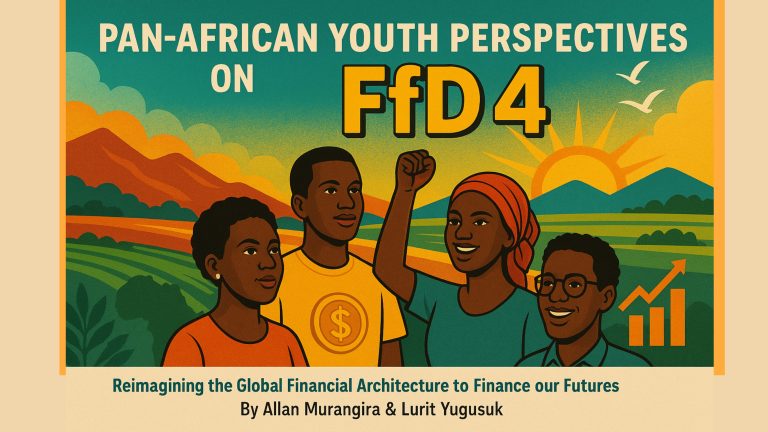
Africa, home to the youngest and fastest growing population globally, has faced shrinking fiscal space, capital flight, and uneven access to international financial markets. For African youth, who not only represent over 70% of the continent’s population but also the continent’s potential drivers of innovation and growth, these challenges translate into restricted opportunities, heightened vulnerabilities, and a fragile future.
As Batswana grapple with a BWP 22 billion budget deficit (9% of GDP in 2024), rising public debt of 27.4% of GDP, squeezing funds for youth-centric programs and youth unemployment at 43.86%, underscoring the urgency of prioritizing job creation and social services for the nation’s youth-dominated population (70% under 35), the FfD4 presents an opportunity for Batswana to redefine global rules on sovereign debt, a critical issue for Botswana as diamond revenue volatility strains public finances.